STREAM WITH HART
STREAM WITH HART

serving as your new feed for living an empowered life
A For You Page reimagined
Welcome to my alternative to social media: no politics, no pressure, no sales pitches.
Simply a place to scroll content intentionally designed with ease, good energy and everyday empowerment in mind.
I will be sharing my own thoughts, experiences and insights along with a variety of resources that I find of value.
I’d love for you to follow along and make this space part of your routine. Bookmark the page, sign up for occasional notifications so you don’t miss what’s new, and feel free to connect with me directly anytime. This stream is here to support you.
September 2026 - August 2026 - July 2026 - June 2026 - May 2026 - April 2026 - March 2026 - February 2026 - January 2026 - December 2025 - November 2025 - October 2025 - September 2025 - From the Vault
9/22/2026
Why We Don’t All “Just Do It”

Why can one person jump right in while another needs time to prepare? Why does one person need a plan while someone else would rather figure it out as they go? And why can the way someone else gets things done drive us absolutely crazy?
In this episode of Make It Make Sense, I’m exploring the action side of your Personal Process, the different ways we start, plan, prioritize, adjust, follow through, solve problems, make progress and take ownership.
Because “just do it” isn't actually that simple.
The way you move through life isn't necessarily the way someone else will. And when we expect ourselves, or the people around us, to take action the way we would, we can easily mistake a difference in process for procrastination, lack of commitment, control, negativity or even lack of caring.
Understanding your Personal Process helps you stop fighting against the way you naturally operate while also learning how to work better with the people whose process looks nothing like yours.
There isn't one right way to move through life. The goal is to understand your way, recognize when it's working for you or against you, and learn how to use it intentionally.
And if you're curious about your own Personal Process, I also share a little more about the assessment I've created to help put all of those individual pieces together.
MY Feel Empowered Every Day Story
9/19/2026
Long before I had words like Personal Process, Behavior Language or Self-Intelligence, I was trying to make sense of people.
I was the child who felt everything. I noticed the emotional temperature of a room. I paid attention to what people needed, how they responded and what changed when different people were together.
But I didn't necessarily understand what I was noticing.
And I certainly didn't understand myself within it.
For a lot of my life, I did what I think many of us do. I learned how to function within the expectations around me. I became a wife, a mother, an educator. I made decisions based partly on what made sense to me, but also on what I thought life was supposed to look like.
I became very good at adjusting.
What I didn't realize was how easy it is to become so accustomed to considering everyone else, their needs, their reactions, their expectations, their way of doing things, that you can lose track of where they end and you begin.
I don't think I woke up one morning and suddenly realized I wasn't living as myself.
It was much quieter than that.
It was years of experiences that didn't quite make sense. Things I thought I should be better at. Ways I responded that I questioned. Advice that sounded perfectly reasonable but didn't work particularly well for me. Relationships where two people could experience the exact same thing and walk away with completely different understandings of what had happened.
And underneath so much of it was an assumption I didn't know I was making:
If someone else can do this differently, maybe I'm the one doing it wrong.
Then life gave me plenty of opportunities to question that.
My marriage of 25 years ended. My children grew up. The roles that had defined so much of my adult life began changing. I left a secure career. I moved across the country. I started businesses. Some things worked. Some didn't. I had to make decisions without the identities and structures I had relied on before.
And eventually the question became less about “What am I supposed to do now?”
and much more about: “Who am I when I'm not trying to be who I'm supposed to be?”
That question changed everything.
I began to recognize that many of the things I had judged in myself weren't deficiencies at all. They were patterns.
There were reasons I noticed what I noticed.
Reasons I connected with people the way I did.
Reasons I could move quickly in some situations and struggle with things other people seemed to manage easily.
Reasons certain environments brought out the best in me while others required enormous amounts of energy just to function within them.
And the more I understood myself, the more I began seeing the same thing in everyone else.
The behavior we see isn't random.
There is something underneath it.
People take in information differently. They process differently. They make decisions differently. They need different amounts of structure, certainty, connection, time, freedom and interaction. They are motivated differently. They communicate differently.
And we are constantly interpreting those differences through our own way of operating.
That's where so much unnecessary hurt and judgment can begin.
We call someone uncaring because they don't respond the way we would.
We call someone controlling because they need more certainty than we do.
We call ourselves lazy because someone else seems able to create structure we can't sustain.
We assume someone's behavior means something about us when it may have far more to do with how they naturally move through the world.
I know what it feels like to live inside those misunderstandings.
I also know what changed when I began understanding them.
I stopped needing every difference to mean something was wrong.
Different doesn't mean wrong.
That sentence isn't a marketing phrase to me.
It's something I had to learn.
And eventually, understanding myself wasn't enough. I wanted language for what I was seeing so other people could understand themselves before they spent years questioning, comparing, accommodating, assuming or trying to become someone they weren't.
That's where this work really came from.
Not an assessment.
Not a methodology.
Not a business idea.
A lived need to understand why we are the way we are and what becomes possible when we finally do.
Because understanding myself didn't give me control over everything that happened in my life.
It gave me something much more useful.
It helped me recognize what was mine.
My needs.
My patterns.
My reactions.
My responsibility.
My choices.
My life.
And it helped me recognize what wasn't mine.
Other people's expectations.
Other people's reactions.
Other people's processes.
Other people's choices.
That separation created a kind of freedom I hadn't experienced before.
And I think that is why the word empowered has stayed with me through every evolution of this work.
To me, empowerment isn't having everything figured out.
It isn't controlling what happens.
It's knowing yourself well enough that when life changes, relationships get complicated, expectations get loud or someone else's way of doing life looks nothing like yours, you don't have to lose yourself inside of it.
You can understand.
You can accept.
You can adapt when you choose to.
You can take responsibility when it's yours.
You can let go when it isn't.
And you can choose what happens next.
That's why I created this work.
Because I spent a lot of my life learning how to understand everyone around me.
It took me much longer to realize I deserved that same understanding from myself.
And now I want other people to have it much sooner.
THE Feel Empowered Every Day Story
9/18/2026
Most of us spend a lot of our lives trying to figure people out.
Why did they react like that?
Why can't I just do what I know I should do?
Why does something that seems easy for someone else feel so difficult for me?
Why does my partner need something I don't understand needing?
Why does one person want a plan while another wants options? Why does one need time to think while another needs to talk it out? Why does one person move quickly while another needs certainty first?
And somewhere along the way, we start attaching meaning to those differences.
Lazy. Difficult. Too sensitive. Controlling. Unmotivated. Indecisive. Selfish. Disorganized. Needy. Stubborn.
Sometimes we turn those judgments on other people.
And sometimes we turn them on ourselves.
But what if the behavior isn't the whole story?
What if there is a process underneath it?
That's the idea behind Personal Process.
Every person has ways they naturally take in information, deal with what is happening, make decisions, get started, create structure, solve problems, connect with people, handle conflict, respond to uncertainty and determine what matters to them.
Those things work together.
And when we don't understand that process, we can spend years trying to correct things that aren't necessarily wrong.
We compare ourselves to people who operate differently. We expect other people to respond the way we would. We assume intent based on behavior. We push ourselves into systems that don't work particularly well for us. And sometimes we make important decisions without understanding what we actually need.
That's why I created the Personal Process Assessment.
The assessment isn't designed to put you into a type or hand you another collection of labels.
It gives us information.
Together, we use that information to recognize the patterns in how you naturally think, act and relate.
That's your Personal Process.
Once you understand your process, something else becomes possible.
You begin developing Self-Intelligence.
Not simply knowing things about yourself, but understanding yourself well enough to recognize what you need, what gets you off track, what works for you, where you may need to stretch, and what you can intentionally manage.
And that changes the way you see behavior, too.
Behavior is a language.
What looks like procrastination may have a process underneath it. What looks like controlling may be someone's need for certainty. What feels like disinterest may not be personal. What looks obvious to you may genuinely not be obvious to someone whose process works differently.
Understanding Behavior Language helps us become more curious about what is underneath what we see in ourselves and in other people.
Different doesn't automatically mean wrong.
And understanding your Personal Process doesn't mean you get to say, “That's just how I am.”
Quite the opposite.
The better you understand your process, the more responsibility you can take for how you use it.
You can recognize when it is serving you and when it isn't.
You can communicate what you need instead of expecting someone else to know.
You can understand someone without having to agree with them.
You can adapt without abandoning yourself.
You can stop trying to control things that aren't yours to control and become more intentional about the things that are.
And that's where empowerment comes in.
Feeling empowered every day doesn't mean feeling confident, happy or in control every day.
Life is still going to happen.
People will disappoint you. Relationships will change. Careers will shift. Plans won't work. You will second-guess yourself. Someone you love will make a choice you wouldn't make. And sometimes you won't know what comes next.
Empowerment is having enough understanding of yourself to know that you still have choices within those experiences.
What is mine to understand?
What is mine to accept?
What is mine to communicate?
What is mine to change?
What is mine to let go of?
And what is mine to choose?
That's the work I do.
I help people understand their Personal Process, make better sense of Behavior Language, develop greater Self-Intelligence and use that understanding in the places where life actually happens in themselves, their relationships, their work, their health and the transitions they never quite feel prepared for.
Because when behavior makes more sense, relationships can get easier. Decisions can become clearer. Life can feel a little lighter.
Not because you suddenly have control over everything.
Because you have a better understanding of yourself within it.
And to me, that's what it means to Feel Empowered Every Day.
You’re Not Supposed to Think Like Everyone Else
9/15/2026
Have you ever struggled to make a decision because you weren't sure if you were thinking about it the "right" way?
Some people need information before they move. Some need to talk things out. Some need proof. Others need to experience something for themselves. Some look to the past, some focus on what's happening right now, and others naturally think about where a decision could lead.
None of those approaches is automatically better than another.
In this episode of Make It Make Sense, I explore the THINK part of your Personal Process, the ways you naturally take in information, process what is happening, consider possibilities, make sense of decisions, and ultimately trust yourself enough to move forward.
We also look at what happens when we expect the people around us to think the way we do. The differences that frustrate us in relationships, families, and workplaces may not be problems to fix at all. They may simply be different processes at work.
The goal isn't to learn THE best way to think. It’s to learn YOUR best way to think.
Because when you understand your Personal Process, you can spend less time wondering how you're supposed to do life and become better equipped to navigate it in a way that actually works for you. Next episode: we move from THINKING to ACTING and explore how your Personal Process influences the way you get started, take action, and move through life.
9/12/2026
Creating My Own Assessment
I’ve spent years helping people understand themselves by using an assessment as the foundation.
And somewhere along the way, I realized I was doing something a little backwards.
I was taking someone else’s assessment and translating it into the way I actually see people.
I wasn’t really interested in telling someone what they ranked high or low in. I wasn’t interested in giving them another set of labels to remember.
I wanted to understand the person sitting in front of me.
How do you naturally make decisions?
What do you need before you can move forward?
Why can you handle uncertainty in one situation but desperately want clarity in another?
Why do some relationships feel easy while others seem to require so much effort?
What happens when two completely natural parts of you pull in different directions?
Those were the conversations I kept wanting to have.
So eventually I had to ask myself a pretty obvious question:
Why am I trying to make an existing assessment fit the work instead of creating something that fits the work from the beginning?
That question started a much bigger project than I anticipated.
I began pulling apart what I had learned from years of conversations with people, the patterns I notice, the distinctions that matter, the places people tend to misunderstand themselves and one another.
And I started building my own way of noticing those patterns.
Not to tell you who you are.
To help us have a much better conversation about how you go about being you.
I’ve now had my first few conversations using it, and something about them feels different.
There’s less explaining a system.
More talking about the person.
And I think that’s what I was trying to create all along.
A way to put the assessment in the background and you in the foreground.
Different doesn’t mean wrong.
Sometimes it just finally needs to make sense.
9/8/2026
Are Your Old Stories in Need of An Edit?
Your Story vs Your Experience
Your experiences are what happened. Your story is what you make those experiences mean.
In this episode of Make It Make Sense, I explore how the stories we attach to our experiences can shape how we see ourselves, influence future decisions, and even become part of our identity.
What happens when someone else’s perspective becomes your story about yourself?
When an experience from years ago is still influencing you today?
And would you tell the same story now if you understood yourself then the way you understand yourself today?
Knowing your Personal Process can help you separate what happened from what you made it mean and recognize when it may be time to edit the story you’re carrying forward. You don’t get to change what happened. But you do get to change what happens next.
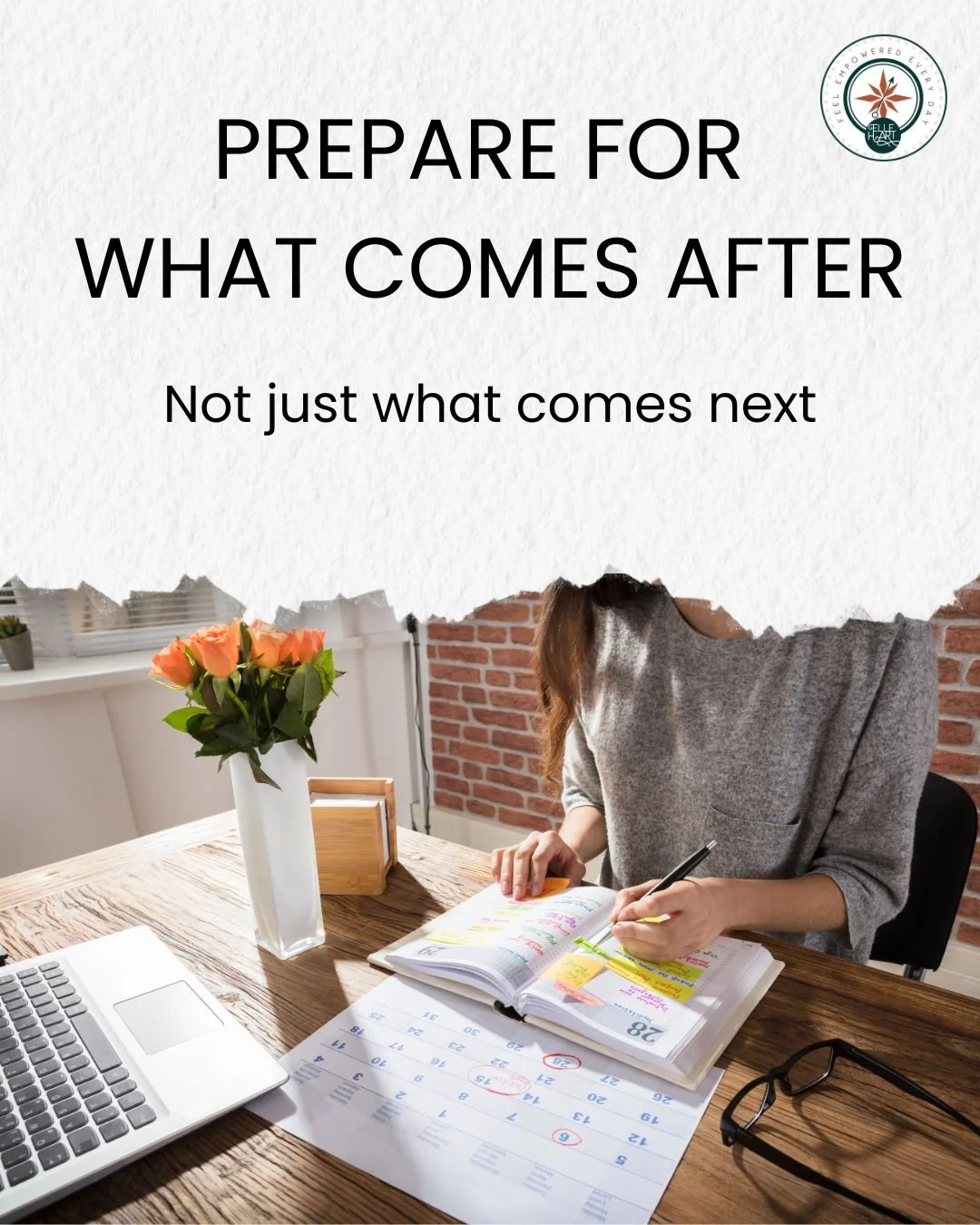
We Prepare for the Milestone, But Are You Prepared For What Comes After?
9/5/2026
We prepare for the wedding.
The new house.
The baby.
The kids leaving home.
The grandbaby arriving.
We plan for the moment, but the moment isn’t usually the part that changes our everyday life.
It’s what comes after.
The wedding becomes a marriage.
The house becomes a shared home.
The baby makes you a parent.
The empty nest changes your role and routines.
The grandbaby creates a whole new family dynamic.
And sometimes we enter those seasons assuming, I’ll figure it out when I get there.
You probably will.
But imagine entering them already knowing more about how you make decisions, what you need when things change, how you respond under pressure, what you need from other people, and what helps you feel like yourself.
We can't prepare for every experience we're going to have.
But we can be better prepared for ourselves when we have them.
That’s what knowing your Personal Process can give you.
The milestone is a moment. What follows becomes your life.
9/1/2026
How Much of Your Life is Actually Yours?
How much of the life you're living is actually yours?
We make decisions every day about our careers, relationships, families, responsibilities and futures. But how often do we stop to consider where those decisions are actually coming from?
Sometimes other people clearly tell us what they think we should do. Other times, the expectations aren't spoken at all. We pick them up along the way from our families, our experiences, the people we admire and even previous versions of ourselves.
In this episode of Make It Make Sense, we're looking at the difference between considering the people who matter to us and allowing their expectations to determine how we live.
Living for yourself doesn't mean living selfishly. It means knowing yourself well enough to recognize what's actually yours and giving yourself permission to recalibrate when something no longer fits so you don't end up living with one of life's biggest regrets.
So here's the question: If you took away everyone else's opinions, expectations and judgments, would you still choose the life you're living?
9/1/2026
Book of the Month
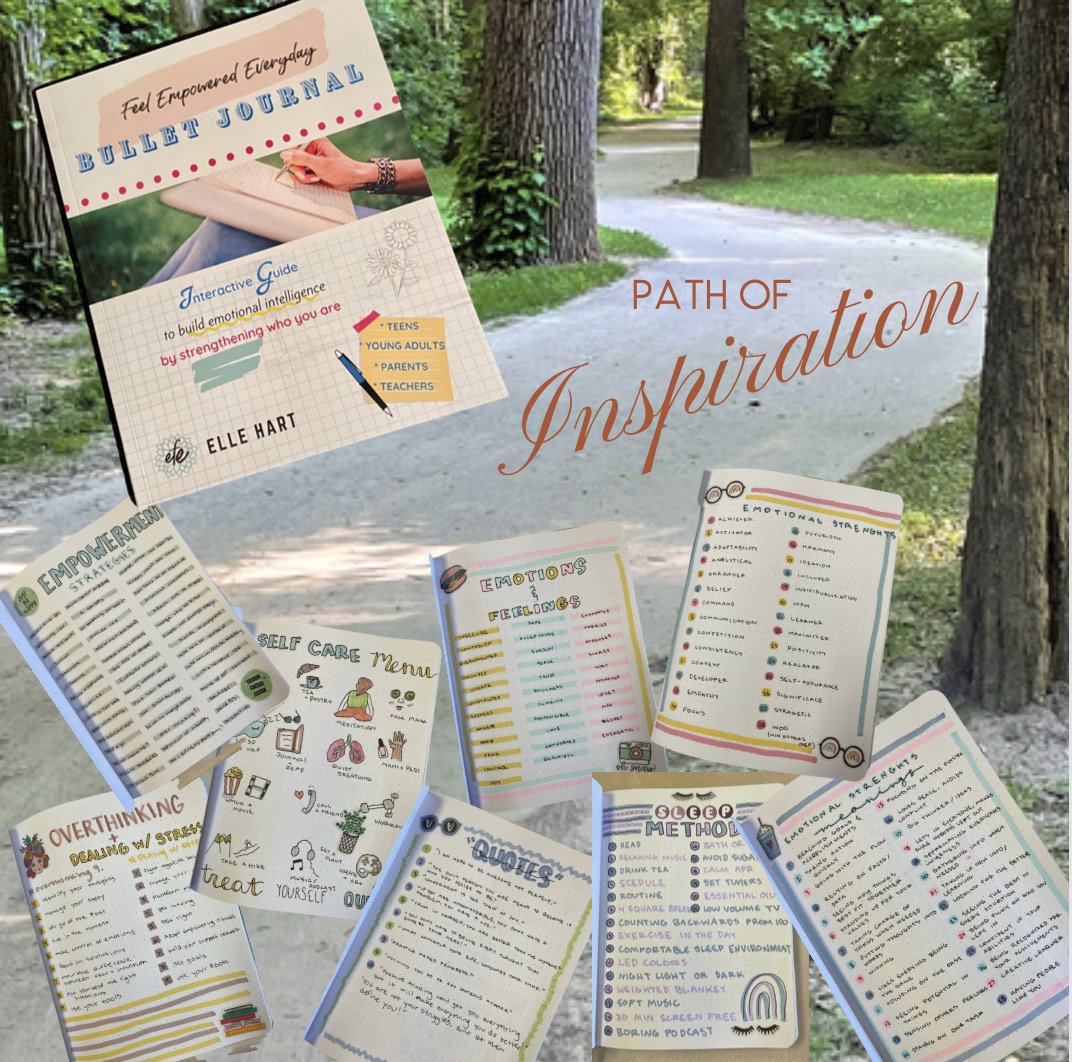
Did you know that Your Behavior Language was not my first book? In July 2022 I published the Feel Empowered Every Day Bullet Journal: An Interactive Guide to Build Emotional Intelligence by Strengthening Who You Are which is also found on Amazon.
The format was inspired by the middle school students who took the summer class I taught on self empowerment. At the end of each class they were always so excited to show me their notes (featured on the photo). I had been working on my first book at the time but was struggling with the organization of my content until their notes popped in my head and reminded me that many of us, including adults, learn best with visuals and condensed information especially given our ever shrinking attention spans.
So the bullet journal interactive guide idea was hatched by following this path of inspiration and I had a blast creating it! (on Canva)
My favorite story regarding this book is when I was working with 3 gentlemen who after a session told me I should write a book so I gave them each a copy and they joked asking if it came with crayons. I suggested they look beyond the graphics and just focus on the material.
The next morning I received a text I will never forget - “ELLE, WHY DID IT TAKE YOU SO LONG TO SHARE THIS BOOK WITH US? WE NEED TO GET THE COPIES OUT OF YOUR CLOSET AND INTO THE HANDS OF THE MASSES! GREAT TOOL FOR THIS WORLD WE LIVE IN!!!”
So I am sharing with you now and hope you enjoy as well!!
What has served as a path of inspiration for you? Have you acted on it and how are you sharing it?